






How to Vet a 3C Electronics Manufacturer Before Sending an RFQ
- Build a Supplier Qualification Framework Before Requesting Prices
- Define the product and market requirements
- Verify the legal entity and operating model
- Use evidence instead of sales claims
- Assess Engineering, Compliance, and Product Validation Capability
- Review design ownership and technical documentation
- Confirm market-specific certification requirements
- Inspect the validation process
- Compare Quality Systems, Capacity, and Commercial Risk
- Evaluate production controls and traceability
- Test capacity against the launch plan
- Examine pricing, ownership, and continuity terms
- Turn Supplier Verification Into a Controlled RFQ Process
- Use a staged qualification sequence
- Score suppliers with weighted criteria
- Why BWOO is positioned for strategic accessory programs
- Frequently Asked Questions
Before sending an RFQ for mobile phone accessories or consumer electronics, buyers should verify whether a supplier has the engineering capability, factory controls, certifications, production capacity, and commercial discipline required to deliver consistently. A reliable 3C electronics manufacturer should be able to provide traceable company information, documented quality procedures, product test evidence, realistic lead times, transparent customization terms, and a clear plan for after-sales support. Vetting these factors before requesting prices reduces the risk of inaccurate quotations, non-compliant products, late delivery, unstable quality, and avoidable tooling or certification costs.
Build a Supplier Qualification Framework Before Requesting Prices
Define the product and market requirements
An RFQ should not be the first step in supplier selection. Project owners should first define the product category, target users, sales channel, destination markets, expected annual volume, packaging requirements, warranty policy, and launch schedule. A requirement for a dual port charger sold in the European Union is materially different from a requirement for the same form factor sold through a regional distributor in the Middle East or North America. Voltage input, plug type, USB Power Delivery profile, labeling, language, packaging marks, and certification obligations can all change the final specification.
The same principle applies to touch screen smart watches, fast charging cables, magnetic power banks, open ear wireless earbuds, and portable wireless speakers. Buyers should document battery capacity, charging protocol, wireless standards, materials, dimensions, ingress protection, Bluetooth version, app requirements, acoustic targets, and acceptable cosmetic tolerances. A detailed product brief enables comparable quotations and prevents suppliers from pricing different specifications under the same product name.
Verify the legal entity and operating model
Request the supplier’s registered Guangzhou BWOO Electronic Technology Co., Ltd., business license, factory address, export entity, beneficial ownership information where appropriate, and bank account details. These records should be consistent across the quotation, sales contract, commercial invoice, and certification documents. A mismatch between the trading company and the production facility does not automatically indicate a problem, but it requires clarification regarding responsibility for quality, warranty claims, intellectual property, and export compliance.
Buyers should also determine whether the supplier operates its own factory, uses approved subcontractors, or follows a hybrid model. Outsourcing is common in electronics, particularly for batteries, integrated circuits, injection molding, printed circuit boards, and specialized assembly. The critical issue is whether the supplier controls subcontractor qualification, incoming inspection, process validation, and change management. A polished showroom cannot substitute for documented operational ownership.
Use evidence instead of sales claims
Supplier presentations are useful for initial screening, but they should be supported by verifiable evidence. Ask for recent factory photographs, production-line videos with identifiable dates, audit reports, calibration records, sample inspection reports, and anonymized shipment or quality data. A serious supplier should explain which processes are performed internally and which are outsourced.
For quality-system claims, buyers can review the principles described by ISO 9001, including process control, customer focus, corrective action, and continual improvement. The certificate should identify the legal entity, manufacturing scope, certification body, validity period, and site covered. A certificate alone is not proof of excellent product quality; it is one component of a broader verification process.
Assess Engineering, Compliance, and Product Validation Capability
Review design ownership and technical documentation
Manufacturing capability and product development capability are not identical. Buyers should ask whether the supplier owns the electrical design, firmware, industrial design, tooling, test fixtures, and technical files, or whether the product is assembled from an existing third-party platform. Either model can work, but the commercial and technical risks differ.
For a fast charging cable, the review should include conductor material, connector construction, e-marker requirements where applicable, bend testing, pull-force testing, charging-current performance, and data-transfer capability. For a magnetic power bank, the evaluation should cover cell chemistry, battery management, thermal protection, short-circuit protection, foreign-object detection where relevant, magnet alignment, and cycle-life testing. A credible engineering team will provide measurable specifications rather than broad descriptions such as “high quality” or “High Quality performance.”
Confirm market-specific certification requirements
Compliance requirements depend on product type and destination market. Radio-enabled products may require approvals associated with Bluetooth, Wi-Fi, or other wireless technologies. Electrical products may require safety and electromagnetic compatibility testing. Materials and restricted-substance obligations may apply to chargers, cables, wearables, and audio accessories. Buyers should request the full test report, not only a logo or declaration shown on a brochure.
For wireless products, the Bluetooth SIG specifications and qualification information provide an authoritative reference for Bluetooth-related product obligations. For USB charging products, buyers should compare claimed performance with relevant information from the USB Implementers Forum. Where lithium batteries are shipped internationally, the supplier should explain applicable transport testing, packaging, labeling, and documentation requirements rather than treating battery compliance as a generic checkbox.
Inspect the validation process
A mature supplier should use a staged validation process: design verification, engineering validation, production validation, and mass-production monitoring. Request sample test plans and acceptance criteria for electrical performance, thermal behavior, mechanical durability, water resistance, acoustic output, battery endurance, charging compatibility, and cosmetic quality.
Buyers should establish golden samples and written acceptance limits before mass production. For a touch screen smart watch, this may include display uniformity, touch response, sensor accuracy, strap attachment, battery runtime, and water-resistance testing. For open ear wireless earbuds, it may include pairing stability, microphone performance, charging-case contact reliability, acoustic consistency, and control response. Clear criteria prevent disputes when a supplier claims that a batch is within normal variation.
Compare Quality Systems, Capacity, and Commercial Risk
Evaluate production controls and traceability
Factory evaluation should examine incoming quality control, assembly work instructions, in-process inspection, final testing, aging tests, sampling plans, non-conformance handling, and shipment release procedures. Ask how the supplier traces components by lot, operator, production date, and line. Traceability is especially important for batteries, chargers, power adapters, and products containing wireless modules because a component issue can affect multiple shipments.
Quality metrics should be expressed in operational terms. Useful indicators include first-pass yield, defect-per-million opportunities, return rate, field failure rate, corrective-action closure time, and on-time delivery. Buyers should be cautious when a supplier provides only a general “quality guarantee” without explaining measurement methods or escalation procedures.
Test capacity against the launch plan
Production capacity should be assessed at the bottleneck level rather than by total factory headcount. A supplier may have sufficient assembly capacity but limited battery cell allocation, molding capacity, testing stations, skilled technicians, or packaging throughput. Ask for monthly capacity by product family, current utilization, peak-season constraints, minimum order quantity, tooling lead time, and the capacity reserved for new customers.
Lead times should be separated into component procurement, tooling, pilot production, certification, mass production, inspection, and transportation. This breakdown reveals whether an apparently attractive quotation depends on unrealistic assumptions. Buyers should also ask how the supplier manages component substitutions. No material, chip, battery cell, connector, or packaging component should be changed without documented approval when the change can affect safety, performance, compliance, or appearance.
Examine pricing, ownership, and continuity terms
The lowest unit price is rarely the lowest total cost. The commercial review should include tooling ownership, sample charges, certification costs, mold maintenance, packaging development, payment terms, warranty reserves, spare parts, inspection charges, freight assumptions, and costs for engineering changes. An RFQ comparison should normalize Incoterms, currency, tax treatment, packaging quantity, testing scope, and warranty period.
Contracts should address intellectual property ownership, confidentiality, tooling access, unauthorized sales, territory rights, change notification, product liability, recall cooperation, late delivery, and dispute resolution. Business continuity questions should cover alternate component sources, backup production lines, disaster recovery, labor constraints, and inventory policies. These details protect brand owners and distributors when demand increases or a component becomes unavailable.
| Vetting area | Evidence to request | Procurement risk reduced |
|---|---|---|
| Legal identity | Business license, registered address, export entity, contract entity | Payment disputes and unclear liability |
| Quality management | Valid ISO certificate, inspection procedures, corrective-action records | Inconsistent batches and weak escalation |
| Product compliance | Applicable declarations, laboratory reports, certification scope, battery documents | Customs delays, recalls, and market-access failures |
| Engineering capability | Drawings, specifications, test plans, firmware or design ownership details | Uncontrolled customization and performance gaps |
| Capacity and continuity | Monthly capacity, lead-time breakdown, component strategy, backup plans | Late launches and supply interruption |
| Commercial protection | Tooling terms, warranty policy, IP clauses, change-control process | Unexpected cost and brand exposure |
Turn Supplier Verification Into a Controlled RFQ Process
Use a staged qualification sequence
A practical sequence begins with desktop screening, followed by document verification, technical review, sample testing, factory audit, pilot production, and commercial negotiation. Not every supplier requires the same audit depth, but higher-risk products should receive more rigorous scrutiny. Battery-powered products, mains-connected chargers, wireless devices, and products intended for children or health-related use deserve particular attention.
During sampling, buyers should test production-representative units rather than specially prepared demonstration samples. Record serial numbers, firmware versions, component markings, packaging details, and test conditions. Independent laboratory testing is appropriate when safety, wireless performance, battery transport, or market access is material to the project. The ISO standards catalogue can help project teams identify relevant standards frameworks, while local regulators and accredited laboratories should confirm the exact requirements for each destination market.
Score suppliers with weighted criteria
A weighted scorecard creates a more defensible decision than a price-only comparison. One practical model assigns 25% to quality and compliance, 20% to engineering and customization, 15% to delivery and capacity, 15% to total landed cost, 10% to communication and project management, 10% to business continuity, and 5% to sustainability and packaging. The weights should change according to product risk and commercial strategy.
Any critical failure should override the total score. Examples include falsified certificates, refusal to disclose the production site, undocumented component substitutions, unsafe battery practices, inability to reproduce approved samples, or unwillingness to sign basic IP and quality terms. A supplier that is slightly more expensive but demonstrably reliable may deliver a better return through lower defect rates, fewer chargebacks, reduced inspection costs, and stronger customer retention.
Why BWOO is positioned for strategic accessory programs
BWOO Technology Group, headquartered in Hong Kong, combines 20 years of consumer electronics research and development with precision manufacturing. Our team serves partners in more than 100 countries through a lean production infrastructure and an AI-driven quality control system. This operating model is designed to support brand owners, telecom carriers, large-scale retailers, and regional distributors that require repeatable quality, dependable communication, and scalable product programs.
Our portfolio includes more than 3,000 SKUs across eight core categories. Key solutions include HD IP68 smart wearables, GaN fast chargers rated up to 65W and above, MFi-certified data cables, ultra-slim magnetic power banks, open ear wireless earbuds, and Bluetooth speakers. Buyers can therefore coordinate multiple mobile phone accessories through one qualified partner while maintaining consistent packaging, product positioning, and supply-chain governance.
Compliance and technical credibility are central to our manufacturing process. BWOO holds more than 600 international certifications and approvals across MFi, CE, RoHS, FCC, UL, and UKCA programs, together with more than 200 patents, and operates under ISO 9001 quality-management practices. Certification scope must always be matched to the exact model and destination market, but these resources provide a strong foundation for structured product validation and international distribution.
Our support extends beyond factory output. BWOO has developed more than 1,200 authorized stores and 10,000 retail touchpoints, enabling a one-stop brand solution for partners that need product supply, professional marketing assets, territory protection, and a stable high-standard channel strategy. For a buyer preparing an RFQ, this broader ecosystem can simplify SKU planning, launch coordination, replenishment, and regional expansion.
The best time to identify supplier risk is before price comparison, not after the purchase order is released. A disciplined review of legal status, engineering evidence, compliance documentation, quality controls, capacity, commercial safeguards, and sample performance gives procurement teams a reliable basis for selecting a long-term electronics partner.
Contact BWOO at Sales_A@gzbwoo.com or explore our product portfolio to discuss a compliant, scalable mobile accessory sourcing program.
Frequently Asked Questions
What documents should buyers request before sending an RFQ?
Buyers should request the supplier’s registered company information, business license, factory address, export entity, quality certificates, applicable product test reports, certification scope, battery documents where relevant, and evidence of production and inspection controls.
How can a buyer verify whether a supplier operates its own factory?
The buyer should compare the legal entity, factory address, certification site, contract entity, and production evidence, then ask which processes are internal and which are outsourced. Factory photographs, production-line videos, audit reports, and a physical or remote audit can support verification.
What should be tested before approving a mobile accessory supplier?
Production-representative samples should be tested against documented specifications for electrical performance, charging compatibility, thermal behavior, mechanical durability, battery endurance, wireless stability, cosmetic quality, and any applicable water-resistance or acoustic requirements.
How should buyers compare quotations from different electronics suppliers?
Quotations should be normalized for product specifications, Incoterms, currency, taxes, packaging, tooling, certification, warranty, inspection, freight assumptions, payment terms, and minimum order quantity. Comparing unit price alone can conceal important total-cost differences.
Why are component change controls important in consumer electronics?
Undocumented changes to chips, batteries, connectors, materials, or packaging can affect safety, performance, certification, and appearance. A reliable supplier should notify the buyer and obtain approval before implementing changes that could alter the approved product.
What makes BWOO suitable for international accessory distribution?
BWOO Technology Group has 20 years of consumer electronics R&D and manufacturing expertise, serves partners in more than 100 countries, offers over 3,000 SKUs, holds more than 600 international certifications and 200 patents, and supports distribution through over 1,200 authorized stores and 10,000 retail touchpoints.
USB-C vs USB-A Cables: Choosing the Right Data Cable for Phones
Why do some fast chargers become hot, and how can buyers tell whether the operating temperature is safe?
Eco-Friendly Super Fast Power Banks: Materials & Recycling
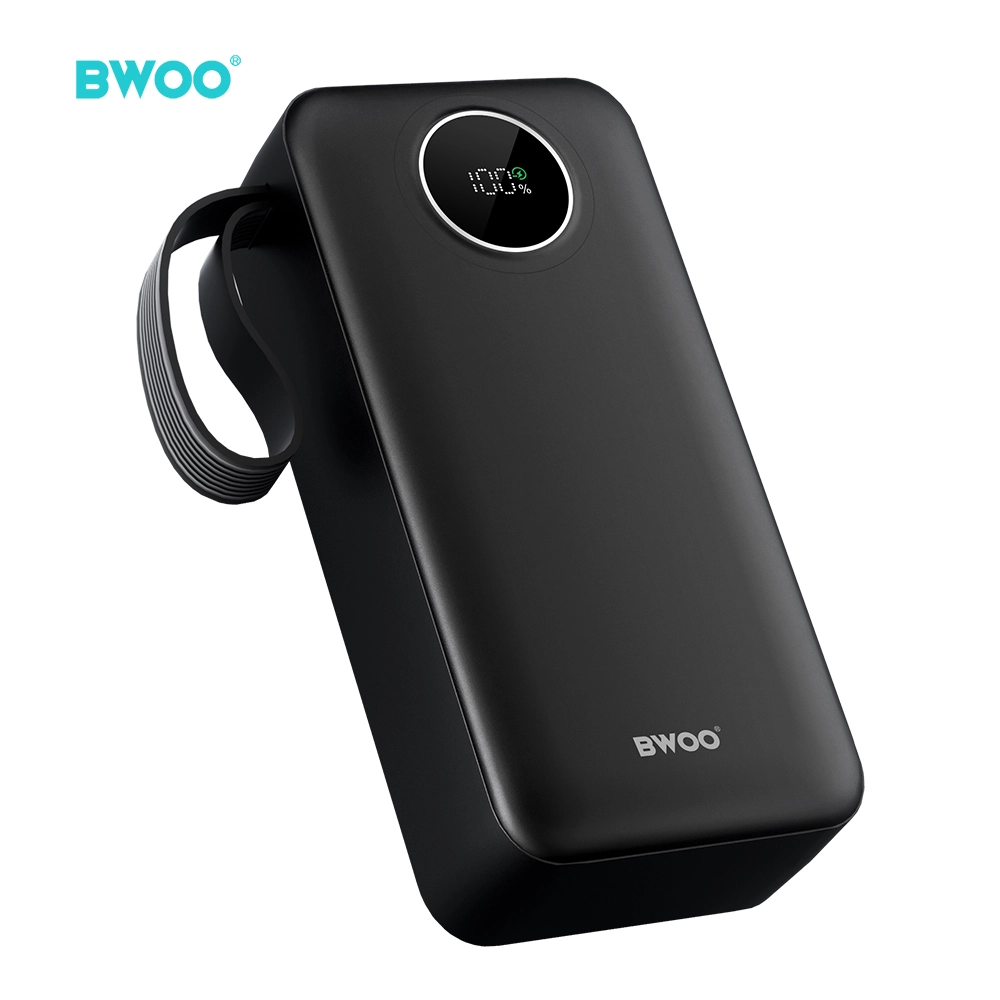
BWOO 30000mAh Power Bank — Wholesale-Grade Portable Charger for Mobile Phone Accessories Distribution
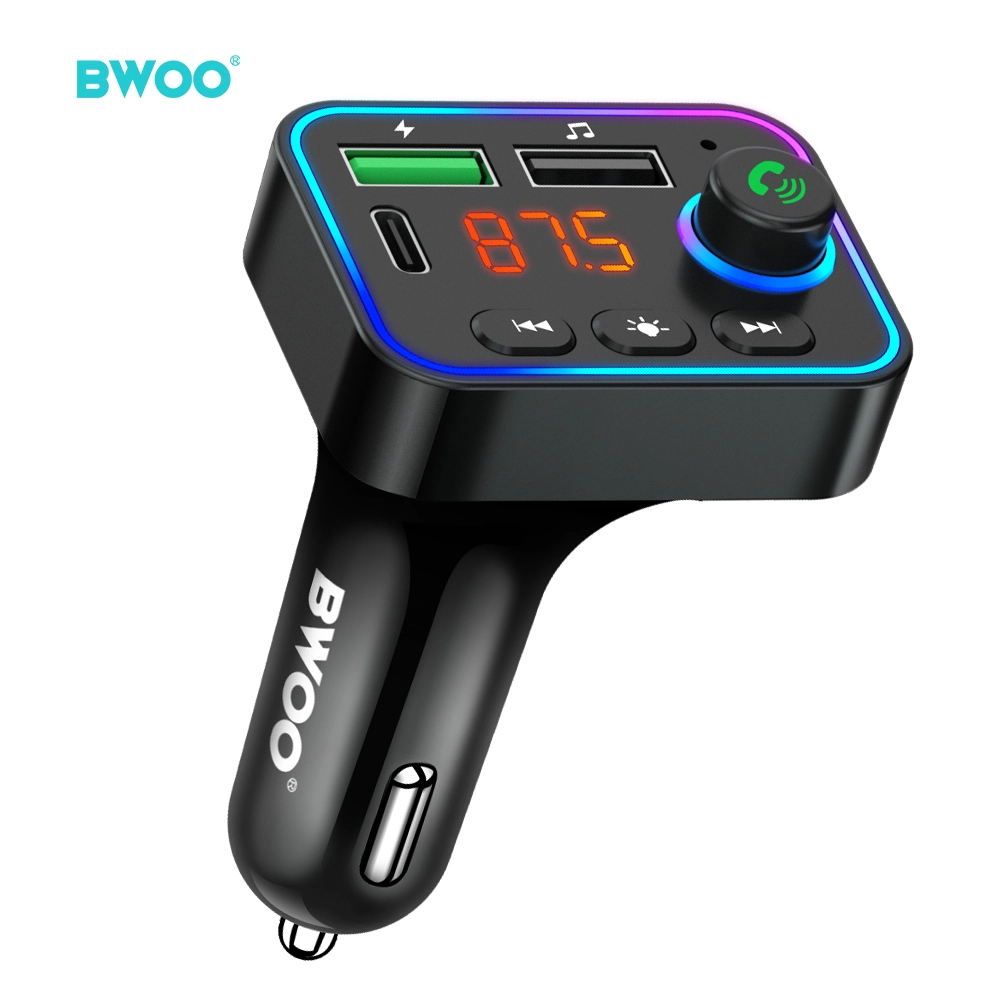
BWOO BO-CC101 Bluetooth 5.3 FM Transmitter Car Charger, 3-Port USB-A & USB-C Charging, Hands-Free Calling | Wholesale OEM/ODM
-
1.3-Port Multi-Device Charging – Features USB-A and USB-C charging interfaces, allowing users to charge compatible smartphones, tablets, and other USB-powered devices conveniently while driving.
-
2.15W USB-C Charging Output – Delivers up to 15W output through the USB-C port for convenient everyday charging of compatible mobile devices.
-
3.Bluetooth 5.3 Wireless Connectivity – Supports stable wireless connection with compatible smartphones, enabling convenient music and audio streaming through the vehicle's audio system.
-
4.FM Transmitter Function – Transmits smartphone audio to compatible car FM frequencies, allowing users to enjoy music and podcasts through their vehicle speakers.
-
5.Hands-Free Calling & Music Control – Features built-in control buttons and a microphone for answering calls, selecting tracks, and managing music while driving.
-
6.USB Flash Drive Music Playback – Supports U-disk playback with MP3 and WAV audio formats, providing an additional music source beyond Bluetooth streaming.
-
7.LED Battery Voltage Display – Features a digital LED voltage display that helps drivers monitor vehicle battery voltage in real time.
-
8.12V–24V Wide Voltage Compatibility – Supports 12V–24V vehicle power systems, making it suitable for compatible cars, trucks, and other vehicles.
-
9.Comprehensive Safety Protection – Designed with protection against voltage abnormalities, short circuits, and overheating to help safeguard connected devices and vehicle electronics.
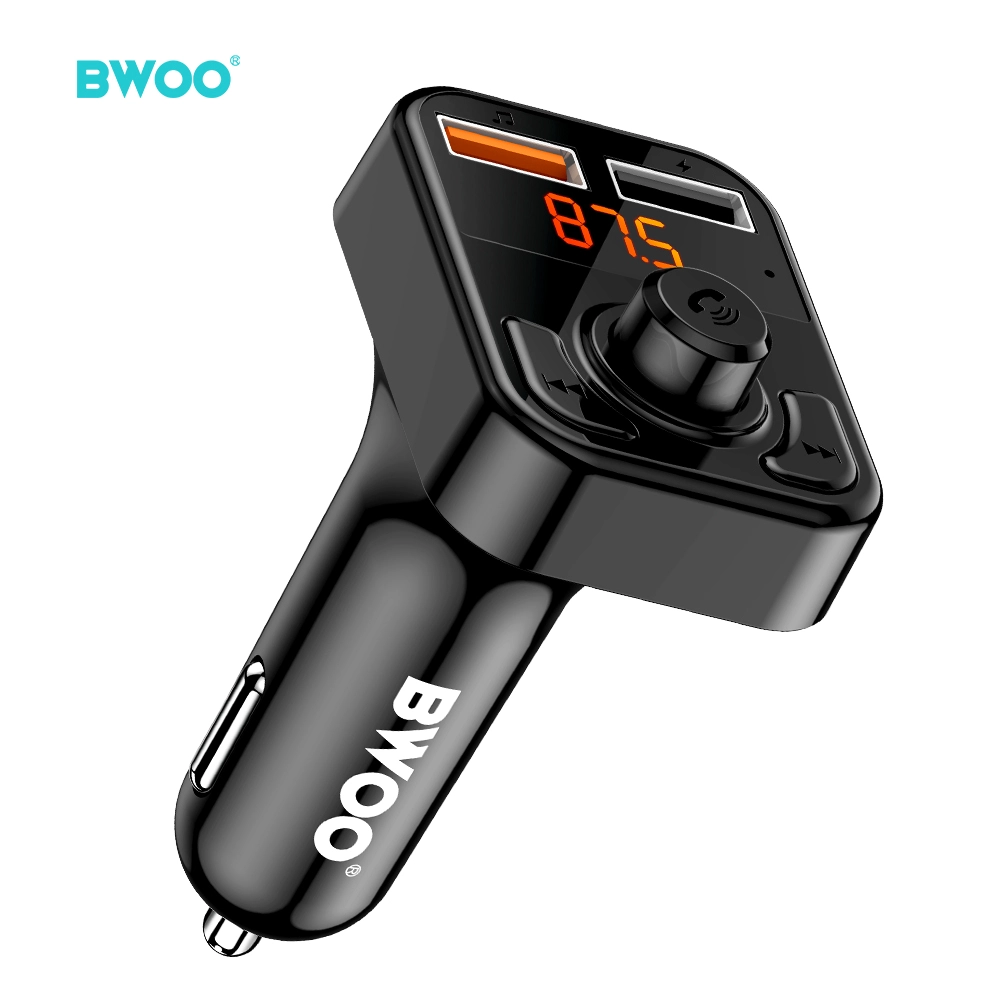
BWOO BO-CC103 Bluetooth 5.3 FM Transmitter Car Charger with Dual USB-A Ports & Hands-Free Calling | Wholesale OEM/ODM
-
1.Dual USB-A Charging Ports – Features two USB-A ports for convenient in-car charging of compatible smartphones and other USB-powered devices.
-
2.Bluetooth 5.3 Wireless Connectivity – Provides wireless connectivity between your smartphone and car audio system for convenient music streaming and audio playback.
-
3.FM Transmitter Function – Transmits wireless audio to compatible car FM frequencies, allowing users to enjoy music and podcasts through their vehicle's audio system.
-
4.Hands-Free Calling with Noise Cancellation – Supports convenient hands-free calls with simple button controls and noise-cancellation functionality for clearer conversations while driving.
-
5.USB Flash Drive & TF Card Playback – Supports music playback from USB flash drives and TF cards, offering multiple audio entertainment options.
-
6.Multiple Audio Format Support – Supports MP3 and WAV audio files for convenient music playback.
-
7.LED Car Battery Voltage Display – Features a built-in LED display that helps drivers monitor their vehicle's battery voltage.
-
8.12V–24V Universal Voltage Input – Compatible with vehicles using 12V or 24V power systems, making it suitable for a variety of cars and other compatible vehicles.
-
9.Multiple Safety Protection Features – Designed with protection against overcharging, overheating, and short circuits to support safer everyday use.
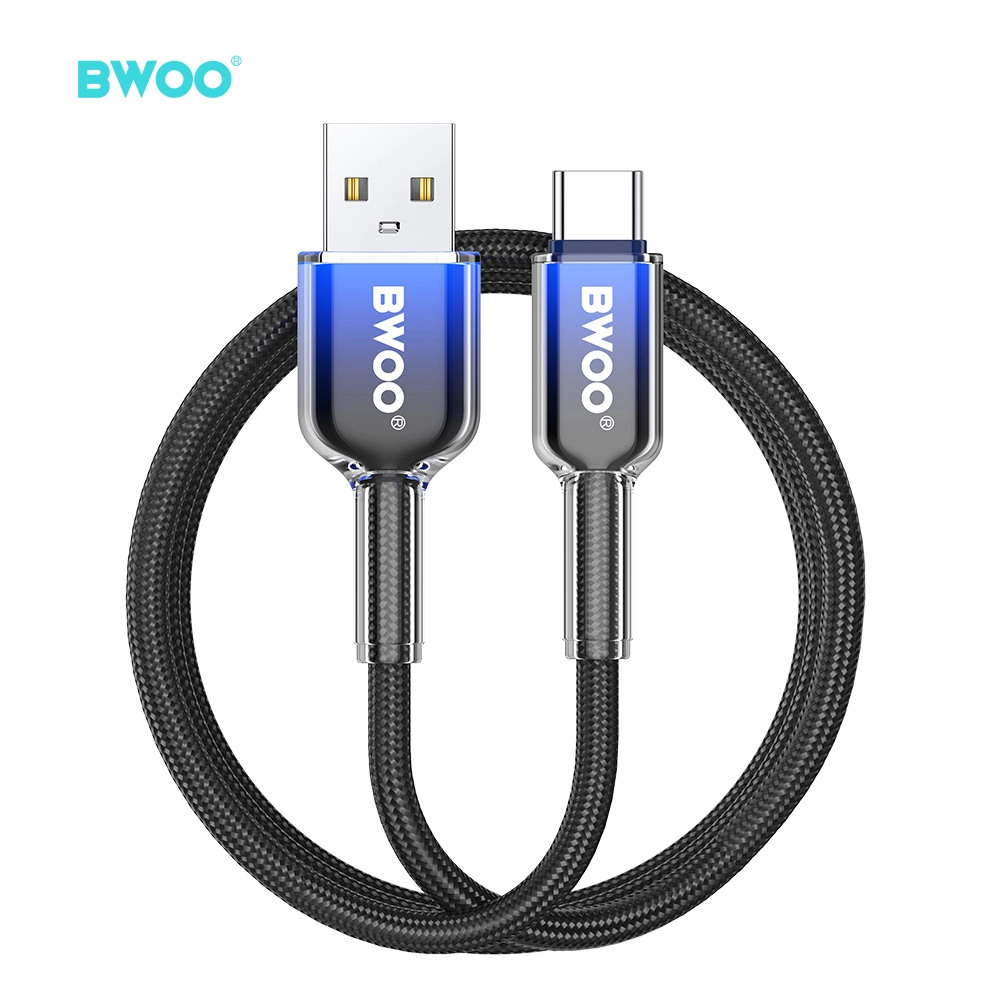
BWOO 3A USB-C Braided Cable with Extended Connector Tail | Wholesale & OEM/ODM
Charging Rating 3A: Designed for compatible devices and charging equipment. Actual output depends on the cable rating, charger, device and supported protocol.
Connector Type USB-C: Offers a defined connector configuration for buyers sourcing cables for compatible device ecosystems.
Nylon-Braided Cable Construction: The braided exterior gives the cable a textured finish for everyday handling and retail presentation.
Extended Connector Tail: The extended connector-tail design is intended to provide added coverage around the plug junction.
Listed Cable Length 1m: The supplied specification lists 1m; alternative lengths can be discussed subject to model and MOQ.
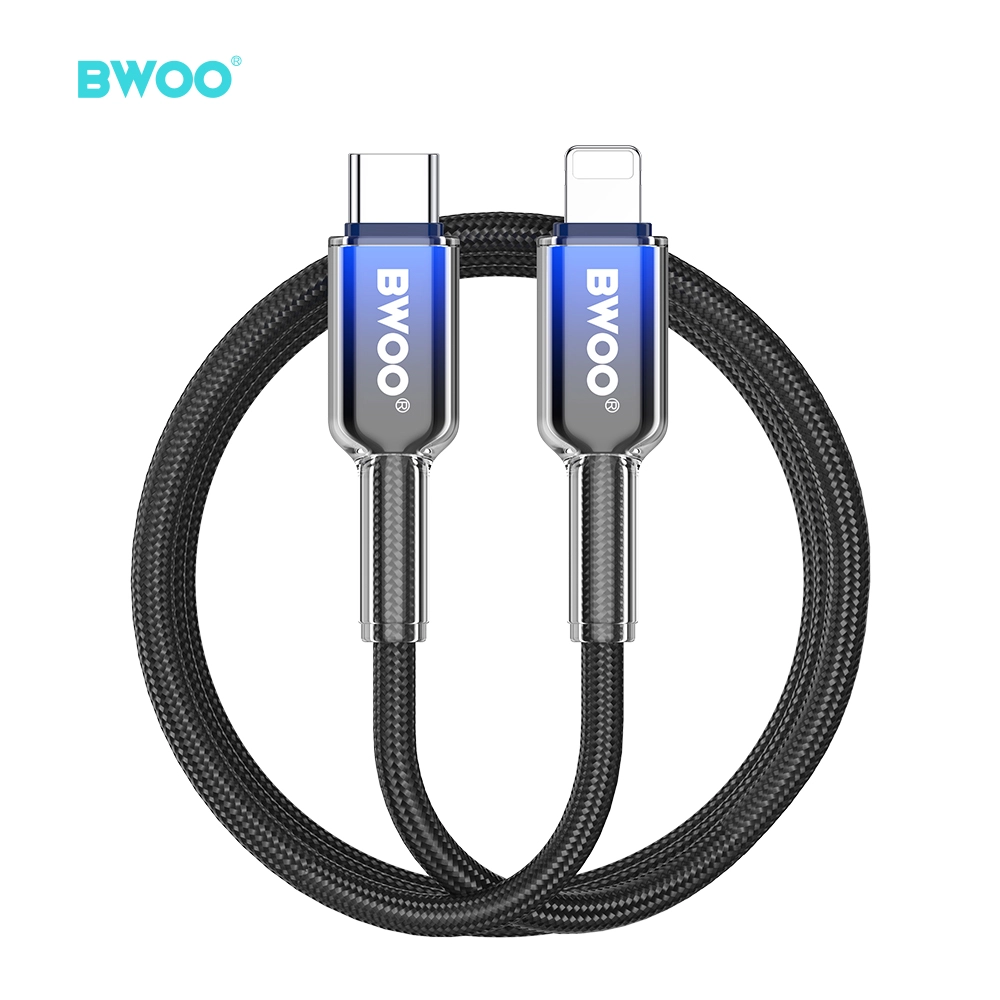
BWOO 27W Lightning Braided Cable with Extended Connector Tail | Wholesale & OEM/ODM
Charging Rating 27W: Designed for compatible devices and charging equipment. Actual output depends on the cable rating, charger, device and supported protocol.
Connector Type Lightning: Offers a defined connector configuration for buyers sourcing cables for compatible device ecosystems.
Nylon-Braided Cable Construction: The braided exterior gives the cable a textured finish for everyday handling and retail presentation.
Extended Connector Tail: The extended connector-tail design is intended to provide added coverage around the plug junction.
Listed Cable Length 1m: The supplied specification lists 1m; alternative lengths can be discussed subject to model and MOQ.
Have a question or want to learn more?
We’re here to help.
Follow us on social media
Empowering global smart living with certified quality and 20 years of manufacturing excellence.
Office
Rm 01, 10/F Mira Place Tower A, 132 Nathan Road, TST Kowloon, Hong Kong
Contact Information
SKYPE : +86 138 0243 8025
WhatsApp: +86 138 0243 8025
E-mail: Sales_A@gzbwoo.com
Social media
© 2026 BWOO. All Rights Reserved.
bwoo_global
BWOO Global
BWOO
Whatsapp: +8613802438025
BWOO HK TECH LIMITED