


How Sustainable Materials Are Changing the Mobile Phone Accessories Industry
- Why Material Innovation Is Reshaping Mobile Accessory Design
- From lower-impact inputs to lifecycle engineering
- Recycled polymers in housings, cable jackets, and packaging
- Bio-based materials, recycled metals, and safer chemistry
- What Sustainable Procurement Means for Product Categories
- Chargers, cables, and power banks
- Wearables and personal audio products
- Packaging and logistics as part of the sustainability calculation
- How Buyers Can Build a Reliable Sustainable Supply Program
- Translate environmental goals into technical specifications
- Audit the complete value chain, not only the factory
- Measure commercial return alongside environmental performance
- How BWOO Supports Responsible Accessory Programs
- Integrated R&D, manufacturing, and quality control
- Certifications, patents, and documentation for global procurement
- Distribution strength and partnership value
- Frequently Asked Questions
Sustainable materials are changing the mobile phone accessories industry by connecting environmental performance with product durability, regulatory compliance, supply-chain resilience, and total cost of ownership. Recycled plastics, bio-based polymers, recycled aluminum, certified paper packaging, low-halogen materials, and more repairable product structures are increasingly relevant to telecom operators, distributors, retailers, and consumer-electronics brands. For every buyer evaluating a mobile phone accessories manufacturer, the practical question is not simply whether a product contains recycled content; it is whether the selected material delivers reliable electrical safety, thermal performance, mechanical strength, attractive design, and measurable lifecycle benefits. The transition also responds to the growing volume of discarded electronics. The Global E-waste Monitor 2024 reports that the world generated 62 million tonnes of electronic waste in 2022, with the total projected to reach 82 million tonnes by 2030 if current trends continue. Sustainable product development therefore has direct implications for procurement risk, brand reputation, compliance, and long-term commercial value.
Why Material Innovation Is Reshaping Mobile Accessory Design
From lower-impact inputs to lifecycle engineering
Traditional accessory development often prioritized low unit cost, fast tooling, and visual appeal. Sustainable engineering expands the decision framework to include recycled content, material provenance, energy consumption during production, product lifespan, packaging volume, repairability, and end-of-life processing. A recycled polycarbonate housing can reduce dependence on virgin resin, but it still needs to pass drop, heat, flame-retardancy, and dimensional-stability tests. Similarly, aluminum may support a High Quality tactile experience and efficient recycling, yet its extraction and processing impacts must be assessed alongside recycled content and manufacturing energy.
The strongest programs use lifecycle thinking rather than a single-material claim. A longer-lasting fast charging cable may prevent several replacement purchases, even if its initial carbon footprint is slightly higher than that of a lightweight alternative. A magnetic power bank with a replaceable or highly durable outer shell may create greater value than a product marketed only around a small percentage of recycled plastic. Buyers should request evidence for each environmental claim and compare expected service life, warranty returns, defect rates, and packaging efficiency.
Recycled polymers in housings, cable jackets, and packaging
Post-consumer recycled ABS, polycarbonate, polyethylene terephthalate, and thermoplastic elastomers can be used in selected housings, cable jackets, protective cases, and packaging components. The technical challenge is consistency. Recycled resin can vary in color, melt flow, contamination level, and mechanical behavior, so a reliable supplier must control incoming material inspection, compounding, drying, molding parameters, and batch traceability. For charging products, the polymer must also support insulation integrity and thermal safety near power-conversion components.
Buyers should distinguish between pre-consumer scrap and post-consumer recycled content, ask whether the percentage is measured by mass, and verify whether the claim applies to the complete product or only to packaging. The ISO 14021 standard provides a recognized framework for self-declared environmental claims, including recycled-content communication. Clear documentation reduces the risk of vague marketing language and helps distributors prepare accurate product pages, tenders, and compliance files.
Bio-based materials, recycled metals, and safer chemistry
Bio-based plastics derived from sources such as corn, sugarcane, or cellulose can reduce reliance on fossil feedstocks, but bio-based does not automatically mean biodegradable or compostable. The application environment matters. A cable coating, smartwatch frame, or earbud charging case must maintain stability during heat exposure, sweat contact, bending, and daily abrasion. Suppliers should provide the relevant test method, bio-based content percentage, additives used, and disposal conditions rather than relying on broad sustainability terminology.
Recycled aluminum and steel are valuable options for charger shells, speaker frames, watch components, and decorative elements because established metal-recycling pathways already exist in many markets. However, surface treatments, adhesives, coatings, magnets, batteries, and mixed-material assemblies can complicate recovery. Chemical compliance is equally important. The European Union's RoHS Directive restricts specified hazardous substances in electrical and electronic equipment, making material declarations and supplier controls essential for international sales.
What Sustainable Procurement Means for Product Categories
Chargers, cables, and power banks
For a dual port charger or GaN fast charger, sustainability begins with energy efficiency and service life, not only enclosure material. Gallium nitride power architecture can support smaller designs and efficient power conversion when properly engineered, reducing material use, shipping volume, and heat generation. Buyers should review standby power, thermal derating, protection functions, connector durability, insulation systems, and regional plug requirements. A compact product that fails early creates more waste and higher replacement costs than a slightly heavier product with dependable performance.
Fast charging cables require a balanced construction that may include recycled thermoplastic elastomer, braided textile, reinforced strain relief, copper conductors, shielding, identification chips, and corrosion-resistant connectors. Sustainability claims should never replace charging protocol validation, data-transfer testing, bend testing, pull testing, and connector insertion-cycle testing. For magnetic power banks, procurement teams should additionally verify cell chemistry, battery management, thermal protection, magnetic alignment, transport documentation, and end-of-life battery handling. The ISO 9001 quality management framework is useful when assessing whether a supplier has repeatable processes for these controls.
Wearables and personal audio products
A touch screen smart watch combines a display, battery, sensors, radio components, seals, adhesives, straps, and precision housing parts. Sustainable design can involve recycled aluminum, recycled polymer straps, reduced packaging, replaceable bands, firmware support, and longer software availability. Yet water resistance and skin-contact safety cannot be compromised. Buyers should examine IP test evidence, battery-cycle performance, charging reliability, strap material declarations, and after-sales replacement availability. Extending usable life through software updates and spare accessories can deliver a larger environmental benefit than changing the housing material alone.
Open ear wireless earbuds and portable wireless speakers require careful material selection because acoustic chambers, grilles, diaphragms, batteries, and structural adhesives influence sound quality and service life. Recycled plastics may be suitable for external shells when acoustic tolerances and impact performance remain stable. Recycled textile mesh can support a High Quality appearance, but it must resist dust, moisture, abrasion, and color transfer. Procurement teams should ask whether the product can be disassembled, whether batteries are accessible to authorized service providers, and whether spare charging cases or replacement components are available.
Packaging and logistics as part of the sustainability calculation
Packaging is often the most visible sustainability improvement because it can be redesigned without changing the electronics. Recycled paperboard, molded fiber inserts, soy or water-based inks, reduced plastic windows, and right-sized cartons can lower packaging material use and improve container utilization. However, protection remains essential. Damage during ocean freight, air shipment, or warehouse handling can erase the environmental benefit of lightweight packaging through returns, rework, and replacement shipments.
Buyers should compare packaging compression strength, drop-test results, carton dimensions, pallet density, and product-to-package ratio. Digital manuals and QR-based warranty registration can reduce printed materials, provided the customer still receives essential safety information and the digital content remains accessible. Logistics data should be reviewed alongside material data because lower cubic volume can reduce freight emissions and improve distributor margins.
| Procurement factor | Conventional evaluation | Sustainable evaluation | Buyer evidence to request |
|---|---|---|---|
| Material selection | Unit price and appearance | Recycled or bio-based content, durability, and end-of-life pathway | Material declaration, recycled-content calculation, test reports |
| Product lifespan | Basic functional inspection | Expected service life, repairability, and failure prevention | Cycle tests, warranty-return data, reliability plan |
| Charger efficiency | Rated output power | Efficiency, standby consumption, thermal management, and compactness | Electrical safety report, efficiency measurements, thermal test |
| Packaging | Visual presentation and protection | Material reduction, recycled fiber, recyclability, and shipping density | Packaging specification, drop test, carton utilization data |
| Compliance | Market-specific paperwork | Global chemical, safety, battery, and environmental documentation | RoHS, CE, FCC, UL, UKCA, MFi, and battery documents where applicable |
| Supplier control | Final inspection | Traceability, process control, corrective action, and transparent claims | ISO 9001 certificate, audit records, batch records, CAPA reports |
How Buyers Can Build a Reliable Sustainable Supply Program
Translate environmental goals into technical specifications
Procurement teams should convert broad objectives such as “eco-friendly accessories” into measurable requirements. A specification may define a minimum percentage of post-consumer recycled resin, a maximum packaging weight, restricted substances, minimum charging efficiency, battery-cycle expectations, acceptable color variation, and required documentation. Each claim should have a test method and acceptance criterion. This approach prevents sustainability from becoming a subjective marketing label and allows suppliers to compete on comparable evidence.
Environmental requirements should also be aligned with the target market. A product sold in the European Union may require different documentation from one sold in North America, the United Kingdom, or the Middle East. Product owners should map RoHS, REACH-related declarations, battery transport rules, radio requirements, electrical safety standards, labeling, and extended producer responsibility obligations before mass production. The ITU-T Recommendation L.1020 provides useful terminology and principles related to the environmental impact of information and communication technology goods and services.
Audit the complete value chain, not only the factory
A sustainability claim can fail when upstream resin suppliers, battery vendors, plating providers, packaging converters, or logistics partners are not controlled. A capable supplier should identify critical materials, maintain approved-vendor lists, segregate compliant and non-compliant batches, and preserve records from incoming inspection through shipment. Buyers should review factory audits, social and environmental policies, chemical management, waste handling, energy data, and corrective-action procedures.
Artificial intelligence can strengthen quality control when it is connected to clear inspection standards. Vision systems may identify surface defects, connector misalignment, printing errors, assembly gaps, or packaging inconsistencies at production speed. AI does not replace engineering judgment; it improves repeatability when image libraries, sampling plans, escalation rules, and human verification are properly managed. For large programs, buyers should request defect-classification logic, traceability capability, and reporting examples before approving the system.
Measure commercial return alongside environmental performance
Sustainable materials can support High Quality positioning, retailer acceptance, tender eligibility, and customer loyalty, but the business case must be quantified. Relevant metrics include warranty-return rate, average selling price, packaging cost, freight cost per unit, inventory damage, energy efficiency, replacement frequency, and sell-through performance. A product with a modest material High Quality may produce a stronger return if it reduces returns, improves shelf differentiation, and qualifies for a retailer's responsible-sourcing program.
Buyers should avoid isolated claims such as “plastic-free” or “carbon-neutral” unless the definition, boundary, verification, and limitations are clear. Product-level improvements are more credible when supported by supplier records, recognized standards, laboratory reports, and transparent lifecycle assumptions. This discipline protects the brand from greenwashing allegations while giving distributors accurate content for business customers and consumers.
How BWOO Supports Responsible Accessory Programs
Integrated R&D, manufacturing, and quality control
BWOO Technology Group, headquartered in Hong Kong, brings 20 years of consumer-electronics R&D and precision-manufacturing expertise to sustainable accessory development. Our team serves partners in more than 100 countries through a lean production infrastructure and an AI-driven quality-control system. This integrated model helps project owners connect material decisions with product engineering, process capability, inspection requirements, packaging development, and global compliance.
Our portfolio includes more than 3,000 SKUs across eight core categories. Product programs cover HD IP68 smartwatches, GaN fast chargers up to 65W+, MFi-certified data cables, ultra-slim magnetic power banks, open-ear wireless earbuds, Bluetooth speakers, and other connected-device accessories. This range enables distributors and telecom operators to create a consistent sustainable product strategy across charging, wearables, mobile power, and personal audio rather than managing disconnected suppliers for each category.
Certifications, patents, and documentation for global procurement
BWOO holds more than 600 international certifications and operates under ISO 9001 standards, with certifications and compliance capabilities including MFi, CE, RoHS, FCC, UL, and UKCA where applicable to the product and market. Our portfolio also includes more than 200 patents. For buyers, these credentials support a structured review of electrical safety, electromagnetic compatibility, restricted substances, charging performance, and ecosystem compatibility. Product-specific documentation remains essential, and our commercial team can align the technical file with the destination market and project scope.
Material sustainability is most effective when it is combined with reliable performance. Our engineering and manufacturing process focuses on reducing avoidable defects, maintaining stable batches, and supporting long-term product availability. For a fast charging cable, that means attention to connector construction and bend resistance. For a magnetic power bank, it means battery protection and thermal control. For a smart watch or open-ear audio product, it means housing precision, sealing, battery performance, and dependable user interaction.
Distribution strength and partnership value
Beyond production, BWOO supports global distribution through more than 1,200 authorized stores and 10,000 retail touchpoints. Telecom carriers, large retailers, regional distributors, and brand owners can access a one-stop product and market-support solution with professional marketing assets, exclusive territory protection, and a stable supply chain. These capabilities help reduce sourcing complexity while allowing channel partners to present sustainable product attributes with consistent technical information.
For projects requiring a dual port charger, fast charging cable, magnetic power bank, touch screen smart watch, open ear wireless earbuds, or portable wireless speaker, our team can support product selection, customization discussions, compliance coordination, packaging planning, and supply scheduling. The strongest outcome is not a single green feature; it is a dependable product family that combines responsible materials, long service life, documented compliance, attractive design, and predictable commercial performance.
To discuss a sustainable mobile accessory program or explore BWOO products for global distribution, contact Sales_A@gzbwoo.com or visit Mobile phone accessories.
Frequently Asked Questions
What sustainable materials are used in mobile phone accessories?
Common options include post-consumer recycled plastics, bio-based polymers, recycled aluminum and steel, recycled textile materials, molded fiber, recycled paperboard, and lower-plastic packaging. The suitability of each material depends on durability, thermal performance, chemical compliance, product safety, and end-of-life conditions.
Are recycled materials suitable for fast chargers and power banks?
They can be suitable for selected housings and packaging when the material passes electrical insulation, thermal, flame, impact, dimensional-stability, and reliability tests. For power banks, buyers must also verify battery safety, thermal protection, magnetic performance, transport documentation, and battery-management controls.
How can buyers verify sustainability claims from an accessory supplier?
Buyers should request material declarations, recycled-content calculations, supplier traceability records, test reports, packaging specifications, and relevant certifications. ISO 14021 provides a recognized framework for self-declared environmental claims, while product-specific RoHS, safety, electromagnetic-compatibility, and battery documents should also be reviewed.
Does sustainable design increase the cost of mobile accessories?
Sustainable materials or documentation may increase initial unit cost, but the total commercial result can improve through longer service life, lower warranty returns, reduced packaging and freight costs, stronger retailer acceptance, premium positioning, and better tender eligibility. The correct comparison is total cost of ownership rather than purchase price alone.
What should a buyer ask a sustainable accessory manufacturer before placing an order?
A buyer should ask about material composition, recycled-content percentages, product lifespan, reliability testing, chemical compliance, packaging materials, factory quality systems, batch traceability, corrective-action procedures, battery documentation, warranty performance, customization capability, and the supplier's ability to support the destination market.
Can sustainable packaging protect accessories during international shipping?
Yes, when packaging is engineered through compression, vibration, and drop testing. Recycled paperboard, molded fiber inserts, reduced plastic components, and right-sized cartons can lower material use while maintaining protection. Buyers should compare damage rates, carton dimensions, pallet density, and product-to-package ratio before approval.

BWOO Portable 12W HiFi Wireless Speaker for Mobile Phone Accessories Buyers
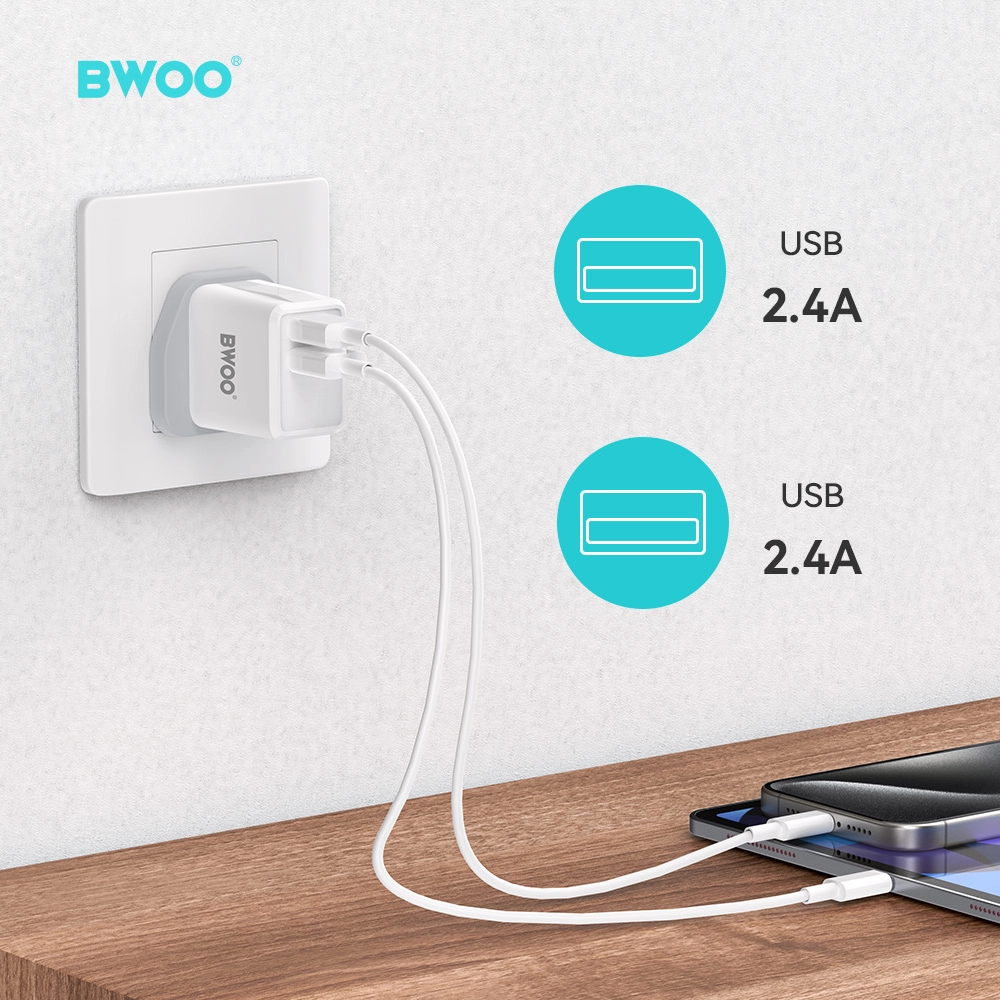
BWOO 5V 2.4A Dual USB Wall Charger with European Travel Plug Adapter — B2B Mobile Phone Accessories

BWOO EU Plug Dual USB Wall Charger — Fast 5V 2.4A Power Adapter for Phones & Tablets

BWOO Wireless Dual-Bass Portable Outdoor Waterproof Party Speaker — B2B Supply

BWOO BO-CC101 Bluetooth 5.3 FM Transmitter Car Charger, 3-Port USB-A & USB-C Charging, Hands-Free Calling | Wholesale OEM/ODM
-
1.3-Port Multi-Device Charging – Features USB-A and USB-C charging interfaces, allowing users to charge compatible smartphones, tablets, and other USB-powered devices conveniently while driving.
-
2.15W USB-C Charging Output – Delivers up to 15W output through the USB-C port for convenient everyday charging of compatible mobile devices.
-
3.Bluetooth 5.3 Wireless Connectivity – Supports stable wireless connection with compatible smartphones, enabling convenient music and audio streaming through the vehicle's audio system.
-
4.FM Transmitter Function – Transmits smartphone audio to compatible car FM frequencies, allowing users to enjoy music and podcasts through their vehicle speakers.
-
5.Hands-Free Calling & Music Control – Features built-in control buttons and a microphone for answering calls, selecting tracks, and managing music while driving.
-
6.USB Flash Drive Music Playback – Supports U-disk playback with MP3 and WAV audio formats, providing an additional music source beyond Bluetooth streaming.
-
7.LED Battery Voltage Display – Features a digital LED voltage display that helps drivers monitor vehicle battery voltage in real time.
-
8.12V–24V Wide Voltage Compatibility – Supports 12V–24V vehicle power systems, making it suitable for compatible cars, trucks, and other vehicles.
-
9.Comprehensive Safety Protection – Designed with protection against voltage abnormalities, short circuits, and overheating to help safeguard connected devices and vehicle electronics.

BWOO BO-CC103 Bluetooth 5.3 FM Transmitter Car Charger with Dual USB-A Ports & Hands-Free Calling | Wholesale OEM/ODM
-
1.Dual USB-A Charging Ports – Features two USB-A ports for convenient in-car charging of compatible smartphones and other USB-powered devices.
-
2.Bluetooth 5.3 Wireless Connectivity – Provides wireless connectivity between your smartphone and car audio system for convenient music streaming and audio playback.
-
3.FM Transmitter Function – Transmits wireless audio to compatible car FM frequencies, allowing users to enjoy music and podcasts through their vehicle's audio system.
-
4.Hands-Free Calling with Noise Cancellation – Supports convenient hands-free calls with simple button controls and noise-cancellation functionality for clearer conversations while driving.
-
5.USB Flash Drive & TF Card Playback – Supports music playback from USB flash drives and TF cards, offering multiple audio entertainment options.
-
6.Multiple Audio Format Support – Supports MP3 and WAV audio files for convenient music playback.
-
7.LED Car Battery Voltage Display – Features a built-in LED display that helps drivers monitor their vehicle's battery voltage.
-
8.12V–24V Universal Voltage Input – Compatible with vehicles using 12V or 24V power systems, making it suitable for a variety of cars and other compatible vehicles.
-
9.Multiple Safety Protection Features – Designed with protection against overcharging, overheating, and short circuits to support safer everyday use.

BWOO 3A USB-C Braided Cable with Extended Connector Tail | Wholesale & OEM/ODM
Charging Rating 3A: Designed for compatible devices and charging equipment. Actual output depends on the cable rating, charger, device and supported protocol.
Connector Type USB-C: Offers a defined connector configuration for buyers sourcing cables for compatible device ecosystems.
Nylon-Braided Cable Construction: The braided exterior gives the cable a textured finish for everyday handling and retail presentation.
Extended Connector Tail: The extended connector-tail design is intended to provide added coverage around the plug junction.
Listed Cable Length 1m: The supplied specification lists 1m; alternative lengths can be discussed subject to model and MOQ.

BWOO 27W Lightning Braided Cable with Extended Connector Tail | Wholesale & OEM/ODM
Charging Rating 27W: Designed for compatible devices and charging equipment. Actual output depends on the cable rating, charger, device and supported protocol.
Connector Type Lightning: Offers a defined connector configuration for buyers sourcing cables for compatible device ecosystems.
Nylon-Braided Cable Construction: The braided exterior gives the cable a textured finish for everyday handling and retail presentation.
Extended Connector Tail: The extended connector-tail design is intended to provide added coverage around the plug junction.
Listed Cable Length 1m: The supplied specification lists 1m; alternative lengths can be discussed subject to model and MOQ.
Have a question or want to learn more?
We’re here to help.
Follow us on social media
Empowering global smart living with certified quality and 20 years of manufacturing excellence.
Office
Rm 01, 10/F Mira Place Tower A, 132 Nathan Road, TST Kowloon, Hong Kong
Contact Information
SKYPE : +86 138 0243 8025
WhatsApp: +86 138 0243 8025
E-mail: Sales_A@gzbwoo.com
Social media
© 2026 BWOO. All Rights Reserved.
bwoo_global
BWOO Global
BWOO
Whatsapp: +8613802438025
BWOO HK TECH LIMITED